
What Another Season of Neglect Actually Costs You
Skip garage door prep one more winter and you're not just risking a dent or a stuck opener. A garage door that fails during high wind can let a storm pressurize your entire garage, which has been known to blow out roof trusses and side walls from the inside. Even a smaller failure, a bent track, a snapped spring under added strain, a panel that buckles, usually means an emergency repair call in the middle of an ice storm instead of a planned fix on a calm afternoon. By the time the first nor'easter-type system rolls through Frederick County this winter, you want to already know your door can take it.
Why the Garage Door Is Your Home's Weakest Wall
Every other exterior wall on a typical house is a solid, continuous structure tied into the frame. The garage door is the opposite: a large panel of thin steel or aluminum, hung on tracks, held shut by springs and a handful of rollers and hinges, with a single motor keeping it in place. It's also usually the biggest single opening in the house. When straight-line winds or storm gusts hit a closed garage door, the pressure has nowhere to go but against that panel. If the door isn't rated for wind load, or the hardware is worn, it can bow, buckle, or tear loose from the tracks entirely. Once that happens, wind gets inside the garage, pressurizes the space, and pushes up and out against the roof and walls, the same mechanism that causes catastrophic storm damage in homes that otherwise would have been fine.
This matters more in this part of Maryland than people assume. Humid summers followed by icy winters put real stress on steel hardware through repeated expansion and contraction, heavy rain and occasional coastal storm remnants bring sustained wind events, and the mix of older homes with original hardware and newer builds with lighter-duty standard doors means a lot of garages in Frederick, Urbana, Mount Airy, Monrovia, New Market, Walkersville, and Clarksburg are carrying more risk than their owners realize.
Signs Your Door Won't Hold Up This Winter
- Visible daylight gaps around the edges when the door is closed, a sign the seal and alignment have degraded.
- Rust or pitting on springs and cables, common after a humid summer, which weakens them right before they're asked to handle extra load.
- Sagging or bowing panels, especially noticeable on wider double doors common in newer construction.
- Loose or bent track brackets, which let the door shift under wind pressure instead of staying seated.
- An opener that struggles or reverses unexpectedly, often a symptom of spring tension that's already off.
- Weatherstripping that's cracked, flattened, or pulling away, letting wind-driven rain push water and cold air into the garage.
Steps to Actually Storm-Proof the Door
1. Reinforce the panels and tracks
Retrofit wind-load bracing kits (horizontal struts bolted to the inside of each panel) are the single most effective upgrade for older sectional doors that weren't originally built for high wind. If your tracks are more than a few years old, check that every bracket is torqued tight; loose brackets are often the real point of failure, not the panel itself.
2. Replace worn springs before, not during, storm season
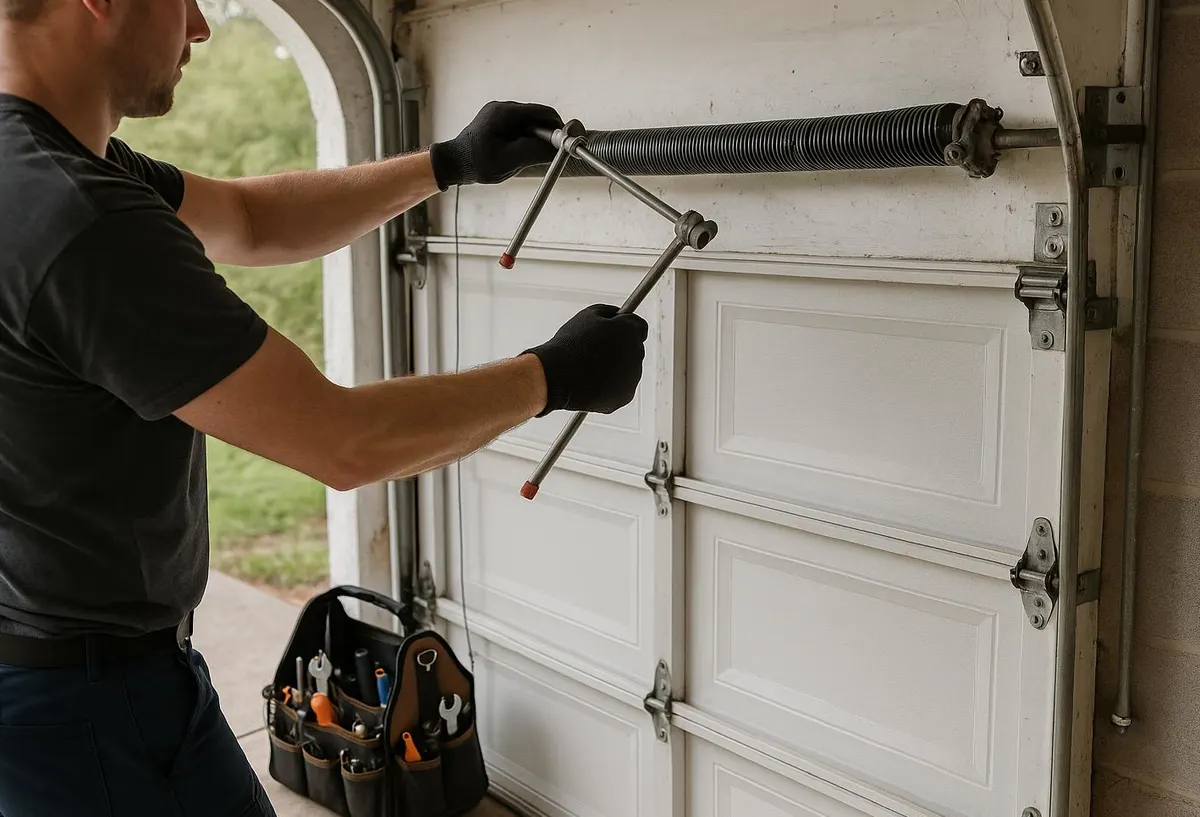
Springs under extra stress from wind load are more likely to snap, and a broken spring mid-storm leaves the door unsupported right when you need it most. If a spring shows rust, gaps between coils, or the door feels heavier than it used to when operated manually, replace it now while the weather is calm.
3. Seal the perimeter
New bottom seals and side weatherstripping block wind-driven rain and reduce the pressure differential that stresses the panel during gusts. This is a low-cost step with an outsized payoff, especially heading into a season with heavy rain and freeze-thaw cycles.
4. Check the opener and add backup power
If the power goes out mid-storm, you want to be able to close the door manually or via battery backup rather than leaving it open or half-open. Confirm the manual release works smoothly and consider a battery backup unit if your opener doesn't already have one.
5. Don't ignore older housing quirks
Homes with original hardware from decades ago often have lighter steel, smaller rollers, and tracks that were never engineered with today's wind-load standards in mind. If your house falls into that category, a full inspection before winter is worth more than patch repairs.
When to Call Ijamsville Garage Door
If you're seeing rust on the springs, gaps in the seal, a door that feels unsteady under hand pressure, or you simply don't know how old your hardware is, that's the point to call rather than wait for a storm to answer the question for you. Our Garage Door Maintenance service covers a full inspection of springs, tracks, rollers, and seals, with adjustments made on the spot. If a spring is already compromised, our Spring Replacement service gets it swapped out correctly and safely, which isn't a job to attempt yourself given the tension involved. We also handle opener upgrades, battery backup installs, and full door replacements for homeowners who want a wind-rated door before the next big system rolls through.
If you're in Ijamsville, Frederick, Urbana, New Market, Mount Airy, Monrovia, Walkersville, or Clarksburg and want your garage door checked before winter weather sets in, call Ijamsville Garage Door today to schedule an inspection.